Page Menu
The N.C. Cooperative Extension partnership logo should be used by all county centers, local programs and other related efforts or initiatives. Individual programs, offices, initiatives and entities should not create their own unique logos.
Following are guidelines and examples for developing a local program identifier with the Extension partnership logo.
County Centers
Logos for all county centers combine the N.C. Cooperative Extension logo with text identifying that local center. These combined marks are subject to the same design rules as the core partnership logo.When adding a county center name to the logo, use the format: “COUNTY NAME CENTER”- Arial font - size should be roughly equivalent to “N.C. A&T” logo text
- Use ALL CAPS
- Center below university logos
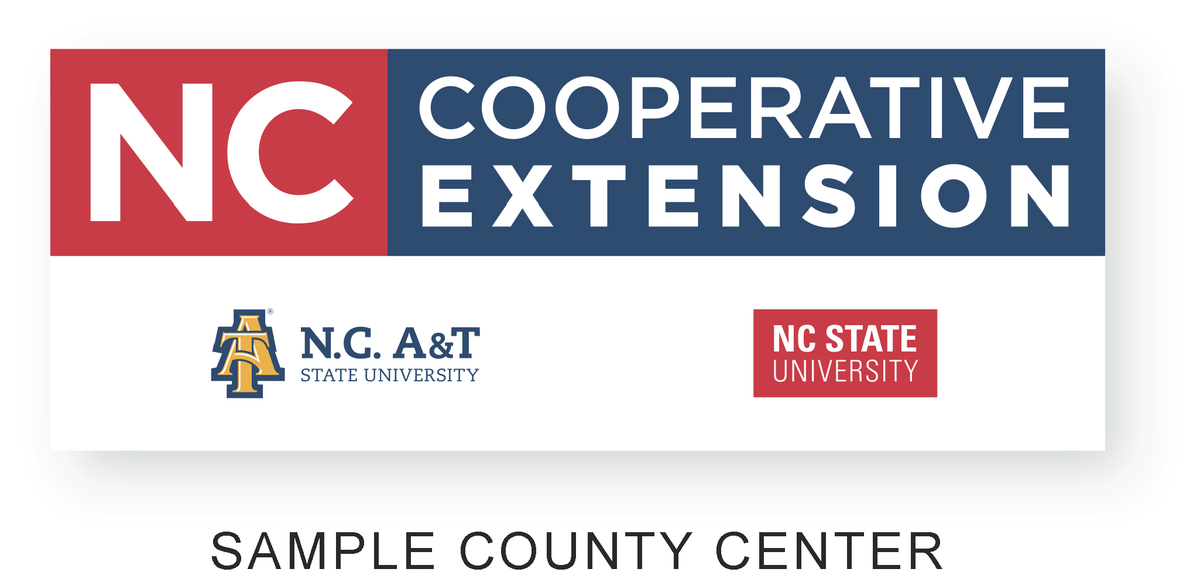
Template for Logo + County Center Name
Download a PowerPoint Template
- Choose the logo version that’s appropriate for your communication
- Type your county center name into the “Sample County Center” field
- Right-click the final image, select “Save as Picture…” and choose JPEG as the format
*Note that this method will help generate a logo file appropriate only for basic digital uses (web, email, etc.). If you need local logo files for print projects, contact our Extension Marketing and Communications team for assistance.
Programs
The N.C. Cooperative Extension partnership logo should be used by all county-based Extension programs. Visualize the overall process as an elevator going down from the top of a building (the university level) and then picking up passengers at each floor (unit, state, local).View a visual explainer of the universities' approach to program branding:
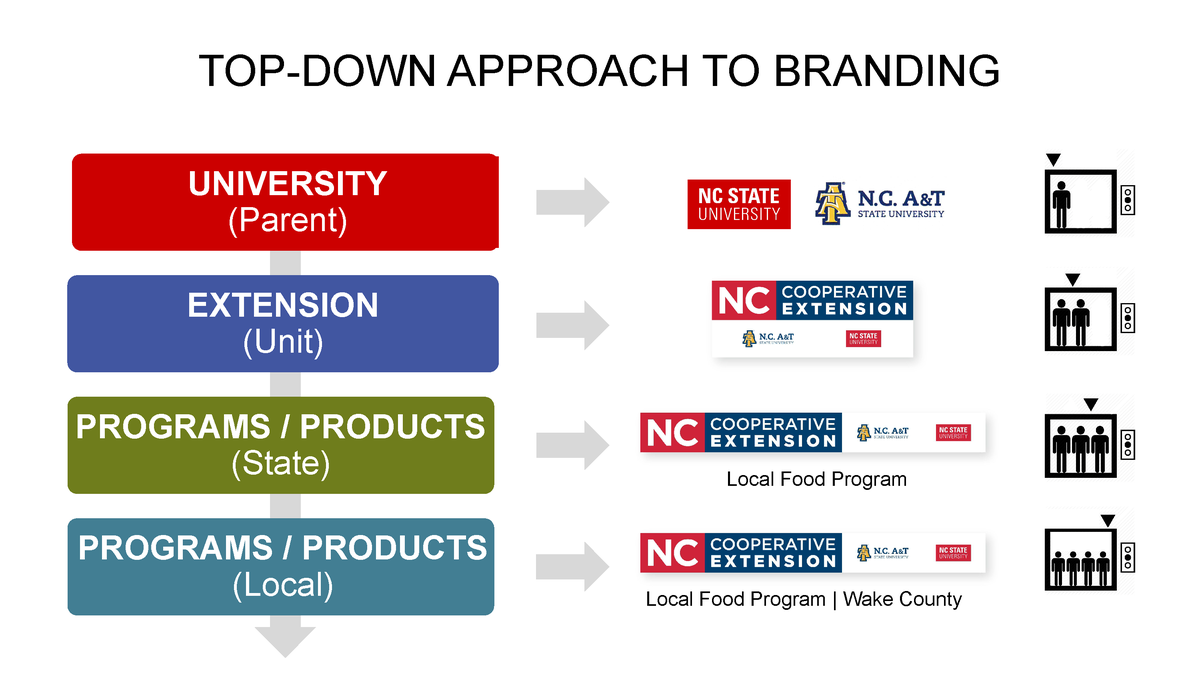
Program Branding Guidelines
- Program names should appear as text at an appropriate distance from the Extension logo.
- Care should be taken to adhere to the rules for using the co-brand logo and appropriate font as you develop program identifiers.
- The Extension logo and program name may form a single graphic, though it is not required that the Extension logo and program name always be used as a singular graphic.
- Entities with multiple funding sources and/or with missions stemming from national organizations, such as 4-H, may be granted sub-brand status. Such entities may use additional marks in conjunction with the N.C. Cooperative Extension co-brand in some cases. (Download 4-H Logos)
Contact us for more information or to confirm a program mark.
Program Branding Examples
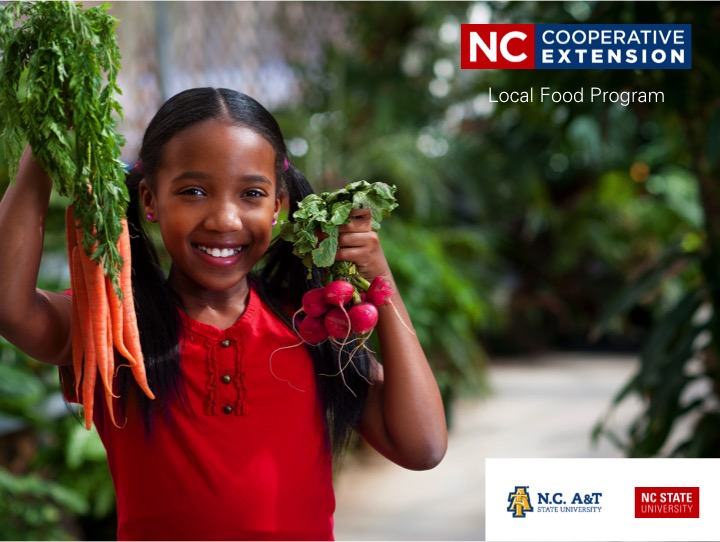
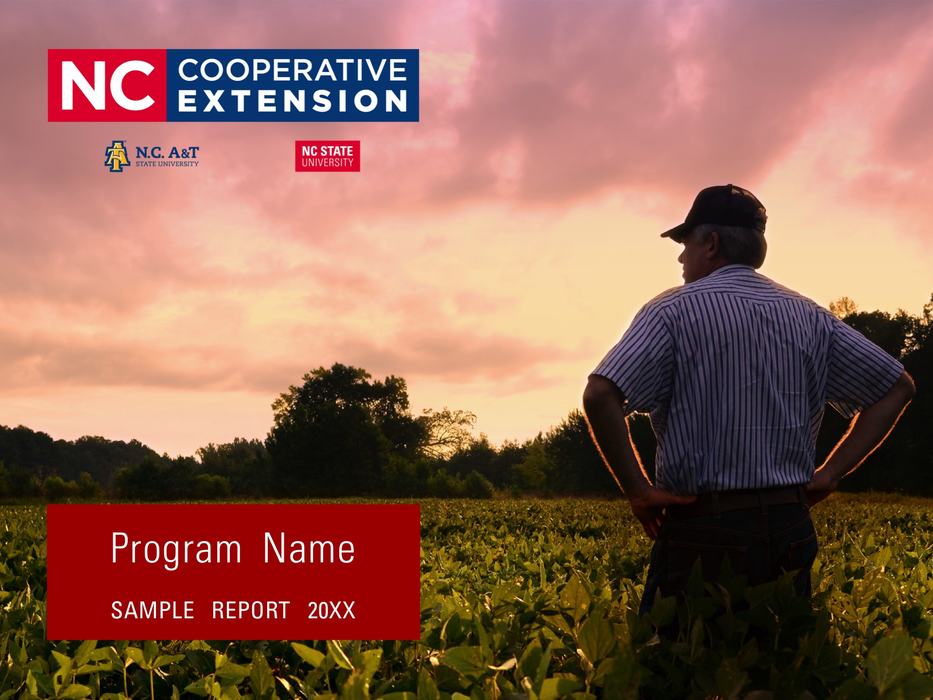
Certain Programs May Be Granted Special Status for a Unique Logo
In the case of 4-H, it's still necessary to recognize the connection with Extension even when using a unique program logo.
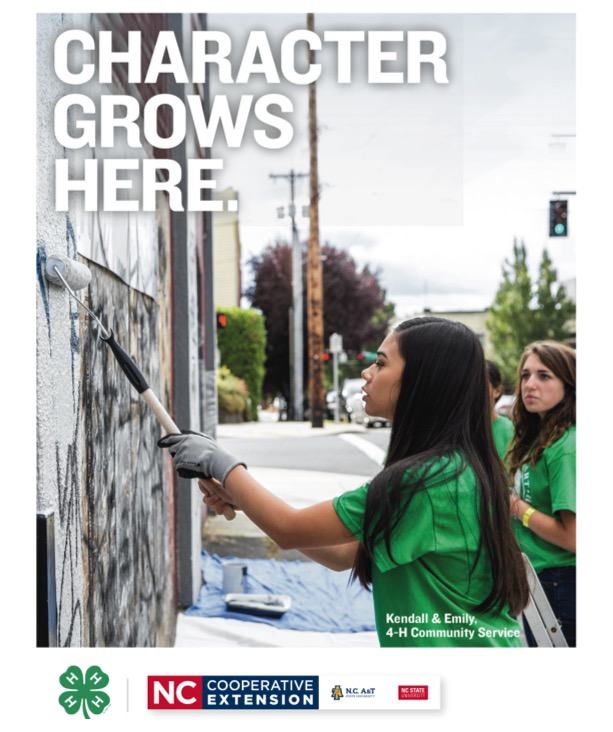
4-H Program Branding
4-H is Extension's youth development program, and the only youth organization based at land-grant universities. As a national program delivered by Extension units at more than 100 universities, 4-H necessitates a unique visual identity that is used alongside our local Extension logo.4-H personnel and programming associated with NC State, both on campus and in local centers, should utilize the resources below when marketing their efforts:Partners
When N.C. Cooperative Extension develops resources in partnership with external entities, treat the partner name(s) and logo(s) as you would use the Extension logo.- Logos should be placed in highly visible locations
- E.g. A cover page, opening / closing of video, top of webpage, etc.
- Prominence may be given to the lead institution, whether or not it's N.C. Cooperative Extension, in terms of logo size and placement (Optional)
- Otherwise, all logos should be comparable in size
- Avoid stacking logos atop one another; opt instead for side-by-side placement
- Strive to create balance while allowing key content like titles to stand out
- Arrange partner logos or names alphabetically
- When the list is long and/or space is limited, consider listing partner names in text instead of logos to streamline things
Back to Top
Sponsors
Sponsors contribute goods, services or funding that help support Extension programming or services. Sponsors may be recognized in a variety of ways, not all of which involve using their logos.- If using sponsor logos, place them at the bottom of a page or in the credits, for example. Sponsor logos should be smaller than the Extension logo.
- Use sponsor names instead of their logos for a more professional look when the list is long or space is limited.
- Group sponsors by contribution level (e.g. gold, silver and bronze) to streamline placement of logos / names, as appropriate. Otherwise, consider listing in alphabetical order.
When Extension Is a Sponsor
When partnering with other organizations, always offer our logo. Don’t wait to be asked. Ask what size(s), color and file format(s) they need.- Send the logo promptly, or point them to Extension's logo download page.
- Make sure they are aware of our logo usage guidelines found on the visual identity page.
- If the logo won’t work, request a name credit: “N.C. Cooperative Extension” or "N.C. Cooperative Extension, County Center Name."
Universities
The NC State and N.C. A&T logos are part of the base N.C. Cooperative Extension co-brand. Review the guidelines relating to the separation of the co-brand and use of the university logos.If a communication pertains to a resource or effort developed independently by one university Extension unit - or if it represents a program specific to an individual university (e.g. N.C. A&T's Speedway to Healthy or NC State Extension Master Gardener℠) - follow the applicable university brand standards:Back to Top